Most people don’t have one clear place that represents them online.
Instead, they have a LinkedIn profile, an Instagram page, maybe a portfolio, a WhatsApp number, and a few scattered links saved somewhere. When it’s time to share who they are, they either send multiple links or just pick one and hope it’s enough.
That gap is exactly what a digital identity page solves.
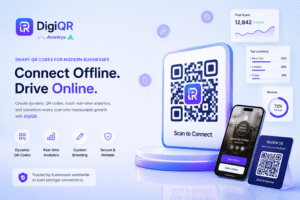
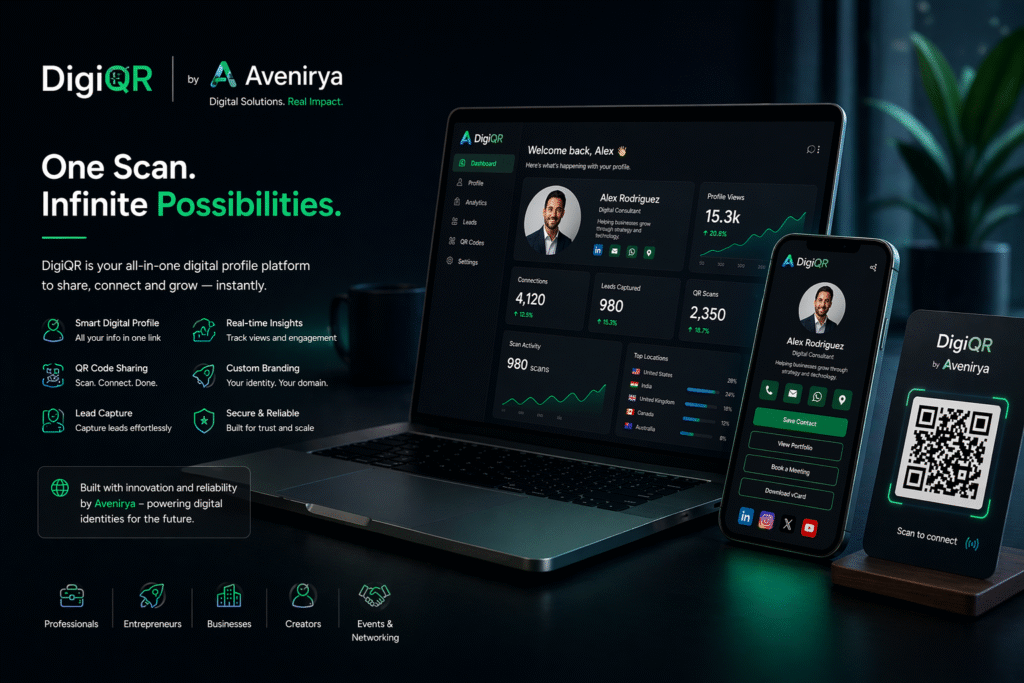
A digital identity page is a single, shareable profile that brings everything important about you into one place. DigiQR positions this as a one smart link paired with instant QR sharing, so instead of sending pieces of your presence, you share one complete view of it.
When sharing yourself becomes harder than it should be
Think about a real situation.
You meet someone at an event, or even online. They ask, “How can I check your work?”
You pause. Do you send LinkedIn? Portfolio? Instagram? Contact?
This is where most people lose clarity.
The more choices you give, the more likely the other person does nothing. Not because they’re not interested, but because it’s not obvious what to do next.
That’s the problem a digital identity page quietly fixes. Instead of making the other person decide, you give them one simple entry point.
And that changes behavior.
Why one smart link changes everything
DigiQR builds its product around a simple idea: one smart link for all your profiles and links, backed by a QR code that can be shared instantly.
That means whether you’re sharing online or offline, you’re not redirecting people across multiple platforms. You’re guiding them to one structured identity.
From there, they can see your contact details, social links, portfolio, and anything else you choose to present — all in one place, without switching contexts.
That’s the shift:
from “here are my links” → to “this is me”
The moment most people realize this matters
The difference becomes obvious when you think about what happens after someone opens your profile.
With scattered links, you lose control.
You don’t know what they saw.
You don’t know if they stayed.
You don’t know if they took action.
DigiQR’s positioning includes lead capture and real-time profile insights, which means that interaction doesn’t just stop at viewing. It becomes something you can understand and act on.
That’s the point where a digital identity page stops being a convenience and starts becoming a tool.
It’s not just about sharing — it’s about clarity
A good digital identity page does three things well:
- It presents your identity clearly
- It makes sharing effortless (through link or QR)
- It creates a structured way for people to engage with you
DigiQR also highlights custom domain and personal branding support, which reinforces that this isn’t just a utility page — it’s something that represents you as a brand, not just a list of links.
And when everything is centralized, your presence starts to feel intentional instead of scattered.
Why this matters more than it seems
In most cases, people don’t ignore you because they’re not interested.
They ignore you because:
- it wasn’t easy to explore you
- it wasn’t clear what to do next
- or it took too much effort
A digital identity page removes all three.
Instead of asking someone to figure you out, you present yourself in a way that’s already organized, accessible, and easy to act on.
That’s why this shift matters — especially in networking, personal branding, and any situation where first impressions decide what happens next.